Pages

Wednesday, 20 September 2017

Best Practices?

So when I heard grade two would be the first for presenting their best practices this year I was worried as I have barely had three weeks to have any practices let alone any best practices.   Deana pointed out I could use any teaching best practices experiences but… with the rush of the new year and getting used to a new grade I can’t think of anything right now it seems.   So I am going to add two things to this blog.  The first is what I spoke about for my best practices last year… the idea of professional development and different ways teachers can develop themselves without the traditional forms of PD. The second is simply plan that I have for Grade 2 and I hope it turns out well!

Professional Development

I am always interested to find out about new ideas or best practices in education.  As a result, I have found a few different ways to do this…

Educational Journals come in a variety of specialties and I am sure you can find different ones to appeal to your area of focus or interest.  
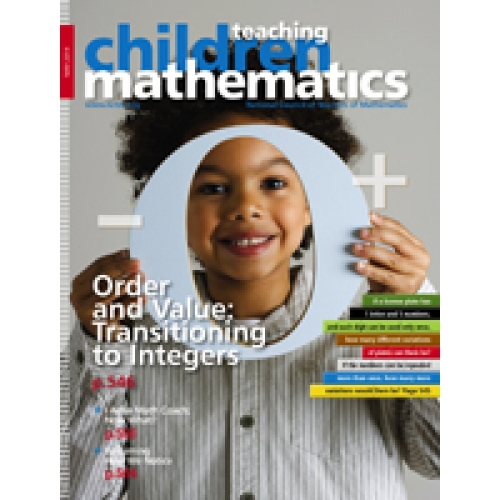

Two of the journals I have subscribed to include The Reading Teacher and Teaching Children Mathematics.  These are an extra expense but I find the information interesting and informative.  From these journals, I have found a few good lessons I can use as is or ones I can adjust to make work for me and my classroom.  I like the fact that they provide professional information with articles that have been peer-reviewed and usually have quality research behind them.  

I also find good professional development books and information from the ATA Library.  If you follow this link : http://library.teachers.ab.ca/Presto/home/ATADefault.aspx it will take you to the search page.  You may have to contact the ATA librarian to obtain your login information… (it’s been awhile so I don’t remember what I had to do) but once you have it you can search out materials that interest you and have the library mail it to you (home or school… you give them the address).  The materials will come in a box or padded envelope with a return label and it’s as simple as keeping the packaging and popping on the return label when you are done or it’s time to return them.  I’ve received many good books as well as DVDs that pertain to different areas of teaching.  

New Best Practice

Now!  Since I did already use that as my ‘best practice’ last year I suppose I should present something brand new and this is something that I hope to use this year.  It blends a bit of formative assessment as well as hopefully encouraging students to use metacognitive strategies to reflect on their learning.  I have created a data binder for each of my students and included inside some checklists for concepts they need to know.  At this time it includes some sight word identification checklists, some skip counting checklists, and other simple concepts.  I hope to include more as the year goes on including rubrics for projects etc.

I intend to use these with the students to help them fill in the checklists to see what they know and to (hopefully) watch their knowledge grow throughout the year.  I intend to link this to their goal setting and hopefully use these to help them plan smaller goals throughout the year.  At this time the checklists are simple and I have only used them with a few students on sight words so far. Hopefully, I will be able to have a positive update for this blog as the year goes on!  

How to post on the blog

This video is from a few years ago, but it explains how to create a new blog post on our blog. If you are posting your best practices, please label it so that we can find them all easily. Good luck! If you need any help, feel free to come see me (Jennine) or Jacob- Your amazing blog committee ;) 

Breakout EDU

There is a cool trend in education, called breakouts. It takes the principles of escape rooms and intertwines them with educational ideas to create fun and engaging student activities. Teachers design a series of challenges that students need to work together to solve using tools like locks, codes, online riddles, etc. Here is the website: http://www.breakoutedu.com/

A few weeks ago I created a breakout challenge for my students on the Iroquois Confederacy. They were really engaged, they problem solved, they collaborated, and to top it off they had fun and reviewed the topics we were learning. It is definitely something everyone should try out! There are lots of digital breakouts that don't require any physical locks. 

Tuesday, 12 September 2017

Planboard... Where have you been all my life?!

Ok, so anyone who knows me knows I spend an exorbitant amount of time making myself a pretty planner each year. BUT Planboard has changed my planning life. I love it! You can check it out at https://planboard.chalk.com


Here is what makes it awesome:

  • It is available on computer or iOS
  • It totally works with our 6 day schedule and you can color code it
  • For each block, you can type, add links, add videos, link in your google docs, etc. It's amazing! And if you don't get to something, you can move your plan box to another day.
  • Lets you view it daily, weekly and monthly
  • Has a to-do list on the daily view
  • Totally FREE!

Tuesday, 4 April 2017

Bead Strings for Mental Math

People have long used an abacus to do calculations.  Some time ago, Jackie Ratkovic suggested the use of beads for students to quickly do addition/subtraction.  Not every student requires a manipulative to do these operations and others prefer to use number lines, etc.  However, I have found that some kids like to be able to see the numbers using the beads.

Students have found these to be beneficial when doing Math Squares Bricks, etc. We have used them for both whole numbers and decimals. We have also been able to look at equality with fractions, decimals, etc.

To make a manipulative for using 10, it is possible to use pipe cleaners to slide the beads on.

To make them, you can use wooden or pony beads and elastic cord.  To make it less time consuming for me, students made the majority of  the bead strings one day as this became one of the math centers students circulated through. This would likely not be an option for younger students, but it is always a possibility to recruit some older students for this job.

String of 100 Beads
A basket of beads is at the front
of the room for kids to use as needed.

Saturday, 18 February 2017

Vertical Number Lines

In class, we often use number lines to help students with their number sense. It helps them to understand sequence and relationships of numbers.  Recently, I tried doing number lines as a math center, but instead of putting it horizontally as I usually have, we made them vertical.  It was interesting to see how it made the kids see it in a different way.

We were working on fraction (ratio), decimal and percent. With the activity we were doing, the students were asked not only to order their numbers, but also to find equivalent numbers.  Students generally figured out to start with the benchmark of 1/2, but it was interesting to see how some numbers were placed. We were able to have some interesting discussions about reasonableness.  We also have a horizontal number line in the classroom with many of these numbers on it and students were encouraged to look at it.  It was interesting to see the challenge students had with translating it from the horizontal to the vertical.  It reminded me of how important it is to have different perspectives when doing math.


Though we used this activity with fractions, decimals and percents, clearly it can be used beyond that from anything from the numbers 1-10, to hundreds, to billions, to integers, etc.

Friday, 16 December 2016

Informal Reading Inventory--Burns & Roe

This year I have tried giving the Informal Reading Inventory (IRI) as an alternative to the PM Benchmark.  The IRI is easy to administer and has the running record component that is essential for testing fluency and decoding.  This test does a more comprehensive breakdown of the reading strategies.

Overall, the instructional levels came out lower than on the PM Benchmark.  However, that was not my main concern.

Image result for burns and roe iri
I was interested in seeing if there were common difficulties with reading strategies.  This information could help guide my instruction, regardless of reading level.  From the data, I could see that inference and finding detail were a concern. I will be able to use the strengths of main idea and cause/effect to strengthen areas of difficulty.


Another piece of information you can get from the IRI which I am currently playing around with is listening comprehension.  It will be interesting to see if students test higher on listening...this will help to see if they use the strategies at all.

Because there are four different forms, there is flexibility in how to test.

Both the PM Benchmark and the IRI have their pros and cons. The key to either assessment is to administer it properly and analyze the results in order to drive instruction.